Why I’m Not Afraid of the “Brain-Eating Amoeba” When I Dive in the Florida Springs
(Quick Disclaimer: I am not a physician or infectious disease specialist. The information in this article is based on publicly available research, general water safety guidance, and my personal experience as a freediver. This content is for educational purposes only and should not be considered medical advice. Always consult qualified medical professionals and follow local safety guidelines when swimming or diving in freshwater environments.)
Recently, a video of me freediving in the Florida springs went viral on Instagram. That had never happened to me before so I didn’t quite know what to expect.
While most of the comments on my video were kind and encouraging, a surprising number of people kept asking me one very pointed question:
“Aren’t you scared of the brain-eating amoeba?”
At first, I honestly had no idea what they were talking about.
Were they referencing a TV show I hadn’t seen yet?
A movie?
“Brain-eating amoeba” sounded like something straight out of science fiction. So I turned to Google, and there it was. Right here on planet earth:
Naegleria fowleri — a single-celled organism found in warm freshwater that can cause a rare and often fatal brain infection called primary amoebic meningoencephalitis (PAM).
Naturally, my first thoughts were:
Geez.
Are these people right?
Has a new fear just been unlocked?
Should I stop diving?
Do I actually need to be afraid of this?
But instead of panicking, I paused and decided to investigate further.
Because sometimes, facts reduce fear.
First, Let’s Talk About the Florida Springs
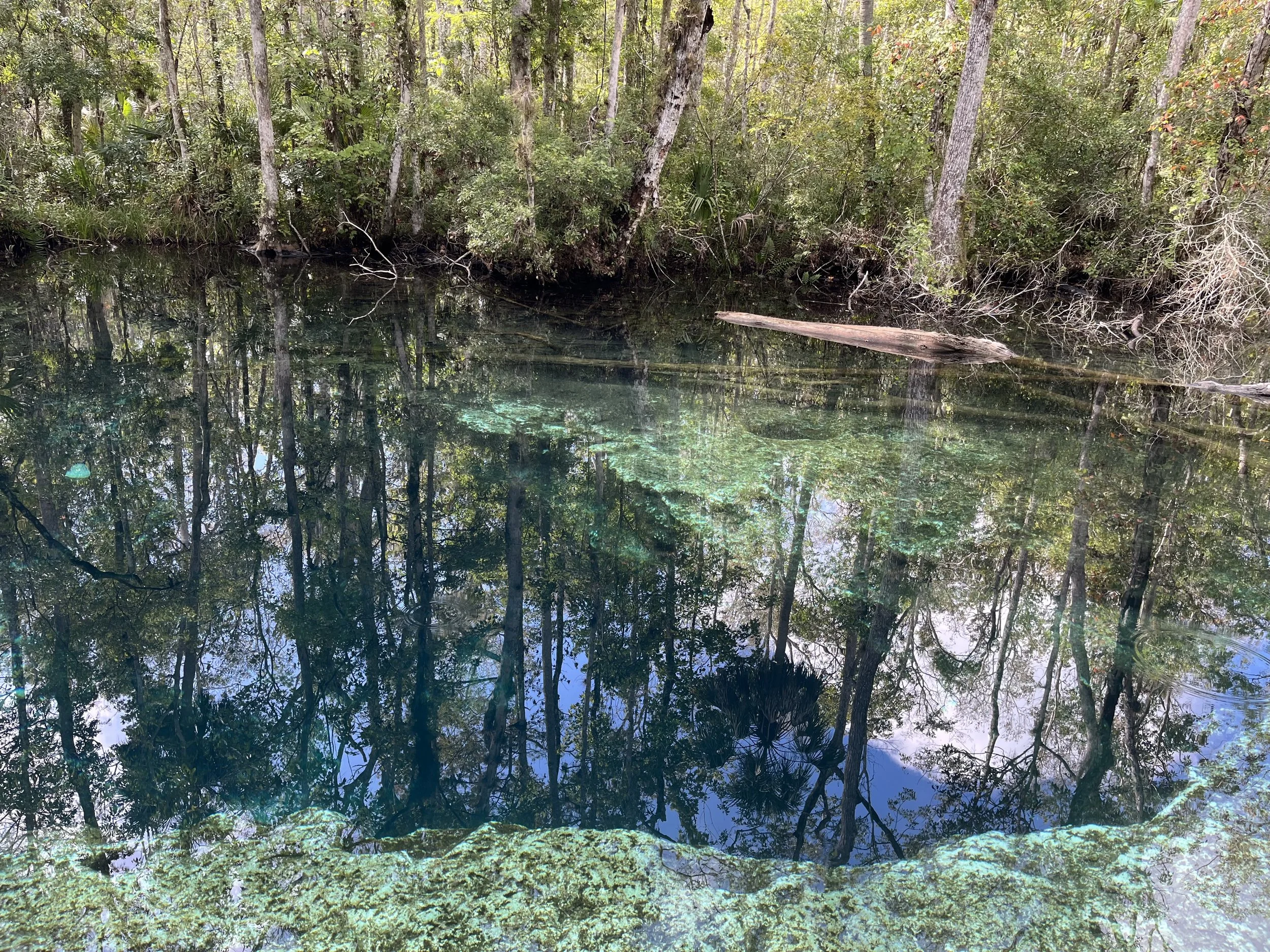
Florida is home to the largest concentration of freshwater springs in the world. There are over 1,000 known springs, many of which maintain a consistent, year-round water temperature of about 68–72°F (20–22°C).
According to floridastateparks.org:
“These natural wonders are created when rainwater collects underground and flows to the surface through the aquifer. The aquifer is a network of limestone caves and crevasses that forms the drinking water reserve for most of Florida.”
An aquifer is simply an underground layer of water-bearing rock, sand, or gravel that stores and transmits groundwater.
This matters — a lot — when we’re talking about Naegleria fowleri.
What Is the “Brain-Eating Amoeba,” Really?
Naegleria fowleri is an amoeba that thrives in very warm freshwater, typically:
Lakes and rivers during hot summer months
Poorly chlorinated pools
Warm, stagnant water
Infection occurs only when water containing the amoeba enters the nose and travels to the brain. You cannot get infected by:
Drinking the water
Swimming normally
Being submerged without water forced into your nasal passages
And here’s the most important part:
Infections are extraordinarily rare.
In the United States, there have been fewer than 160 confirmed cases total over several decades — despite millions of people swimming in freshwater every year.
To put that into perspective:
You are statistically far more likely to be injured driving to the springs than contracting PAM.
Why the Florida Springs Are Different
Unlike shallow, stagnant bodies of water, Florida springs:
Are fed by deep underground aquifers
Maintain cool, consistent temperatures
Have continuous water flow
Are not warm, shallow, or stagnant — the conditions Naegleria fowleri prefers
Most documented cases of PAM occur in hot, shallow freshwater, often during extreme heat, where water is warm enough for the amoeba to thrive.
This doesn’t mean risk is zero — nothing ever is — but it does mean the risk in spring-fed systems is exceptionally low.
What I Do to Reduce Risk (Without Living in Fear)
I don’t dive recklessly or ignorantly. I also don’t let sensational headlines dictate my relationship with nature.
Some simple, common-sense precautions I take:
I avoid forcefully inhaling water through my nose
I don’t dive in stagnant or unusually warm freshwater
I stay informed, not alarmed
So… Am I Afraid?
No — I’m not afraid.
I respect the water.
I respect the science.
And I trust my ability to make informed decisions.
The Florida springs are ancient, powerful, and incredibly healing places for me — physically, mentally, and spiritually. They’re also some of the most carefully studied and protected freshwater systems in the world.
I think it’s healthy to ask questions.
I think it’s wise to learn the facts.
And I think it’s important not to let rare, sensationalized fears keep us from experiences that help us feel alive and connected to nature.
For me, freediving in the springs is one of those experiences.
So the next time you see headlines or some wild claims made on social media: Stop. Breathe. And maybe look just a little further.
What you find may give you the confidence you need to make an informed decision rather than being ruled by fear.
Ready to get started on your freediving journey? Check out my gear guide here.
Sources & Further Reading
Naegleria fowleri — CDC overview of the “brain-eating amoeba.” CDC
CDC explanation of how infections occur CDC
CDC guidance on preventing infection while swimming. CDC
Florida Department of Health’s page on PAM infections. Florida Department of Health
Florida Dept. of Health freshwater activity precautions. Florida Department of Health